what to add to ro water for brewing
Brewing Water
11/26/2021
By Jack Horzempa

Prologue
When I offset started homebrewing over 25 years ago I went to my Local Homebrew Store (LHBS) to purchase homebrewing equipment and ingredients for my showtime batch: a can of Muntons Traditional Bitter, another can of Muntons Liquid Malt Extract, some actress hops for flavor and scent, and a sachet of Muntons dry out yeast. There was ane missing ingredient from that purchase: water. The immature fellow working the store informed me that if my tap h2o tastes good so it is good plenty to brew with. I followed that advice for my get-go batch.
A year or so into my homebrewing avocation I purchased my commencement homebrewing volume: The New Complete Joy of Homebrewing by Charlie Papazian. I all the same have that volume and the pages are quite yellow from age. I learned on folio 73:
"If the water you use for brewing is suitable for drinking in the United States, so there is but 1 thing you equally a beginner [that was me] or intermediate brewer might consider doing to meliorate it. Some municipal water supplies have chlorine content that is excessive for brewing the absolute best beer. Using a countertop activated charcoal-blazon filter will remove chlorine."
I did not know if my municipal water supplier had "chlorine content that is excessive" simply I figured it would be useful to buy an activated charcoal filter that I could spiral onto my kitchen sink faucet. I have used filtered water for my homebrewing thereafter.
The largest ingredient of brewing beer
H2o is by far the largest ingredient, past book/weight, in brewing beer. I have read that water is > 90% of the content of beer. But from my conversations with fellow homebrewers and readings of posts on homebrewing forums it seems like water is the least considered of the ingredients. In that location are lots of discussions about which hops should be selected, which brand/type of malt, which yeast strain to utilize, etc. only there is typically little give-and-take concerning brewing h2o.
Sources of Brewing Water
There are a multifariousness of sources for obtaining your brewing water:
Municipal Tap Water
As I already discussed I receive municipal tap water and this is what I choose to use for my homebrewing. My water supplier treats this water using chloramine as opposed to chlorine. Chloramine is more stable (i.eastward., longer lasting) than chlorine and therefore benign for providing safe drinking water. Unfortunately, chloramine can be a chip more challenging to remove than chlorine. I decided to purchase a three-phase block carbon filter that I installed under my sink to provide the needed 'extra' filtering to remove the chloramine from my municipal tap water. A all-time practice for proper filtering here is a slow flow charge per unit with something like a menstruation charge per unit of one gallon per minute being the goal.

Another method to remove chloramine from tap water is using Campden tablets. The oftentimes-recommended dosage is 1 Campden tablet per 20 gallons of tap water. This recommended value is predicated on a 'worst instance' value of 3 mg/L of chlorine all as chloramine of the tap water. I utilize Haach test strips to measure the chlorine/chloramine value of my tap water, both pre-filtered and post filtering, and I can report that my municipal tap water only contains between 0.5 – 1 mg/Fifty of chlorine as all chloramine. If you know the value of chloramine in your tap water y'all can tailor the corporeality of Campden.
Well water
If y'all have a well supplying your household h2o the adept news is that chlorine/chloramine is not a business organisation. A concern with using well h2o is when yous have difficult water and are using a water softener to treat the h2o. The water softening unit exchanges ions associated with hardness (Ca+, Mg+) with sodium ions (Na+). This increases the sodium content of your h2o significantly and tin result in a harsh bitter flavour. All the sources I've read recommend against using softened water for brewing.
Bottled Bound Water
Water that comes from a spring will incorporate no chlorine/chloramine and therefore is advisable for homebrewing if you have a safe supply. This would generally mean purchasing it and I personally am unwilling to pay for spring water to homebrew beer. An open artesian spring is prone to contamination exactly because it is open so I do not recommend stopping by a roadside leap to fill up.
Distilled H2o
Distilled water is pure H2O with no other contaminants and is a perfect blank slate for homebrewing. For homebrewers who are extract brewers distilled water if oft recommended since the notion is that the extract already contains all of the needed mineral content for brewing. For all grain brewers, using distilled water will require the improver of brewing salts to properly build upwardly the water for brewing.
Opposite-Osmosis (RO) Water
The process of RO filtering results in a water that does not contain chlorine/chloramine and has very piffling mineral content (e.g., approaching distilled water). RO h2o tin can exist purchased past 1- and five-gallon units at larger concatenation stores such equally Walmart (e.yard., Primo brand). Or some homebrewers will install RO filter systems in their houses to produce RO water. If you lot choose to install an RO filter system in your house keep in mind that 'waste product water' will be produced; for every gallon of purified h2o your reverse osmosis system produces, it will likely have used roughly 4 gallons. If you can capture this 'waste product water' (due east.grand., utilise it for laundry, watering your garden, bathing, etc.) then it will not be actual waste. Just like for distilled water, for all grain brewing the RO water will need to take brewing salts added to build upwardly brewing water.
Brewing water considerations
The qualities of brewing water will take 2 basic impacts:
- Mash pH
- Beer season impacts (specific mineral aspects)
Brew pH
In my homebrewing practice my primary concern when it comes to brewing is achieving a proper mash pH. In society to achieve a practiced conversion of starches to sugars (to create the wort) the brew needs to be in an advisable range of values.
Various brewing authors recommend specific ranges for mash pH only something like 5.ii – 5.iv/5.6 is ofttimes the recommended range. In much of the Us the water sources are element of group i so depending upon the beer style y'all may not achieve a pH in this range without taking specific steps (e.g., calculation lactic acid to the mash/sparge h2o). I can mash dark beers (east.m., Stouts, Porters) with my filtered tap water and accomplish a proper mash pH value since the dark malts (due east.g., Chocolate Malt, Roasted Barley Malt, Black Malt,…) are naturally acidic and they bring downwards the pH of the mash into the appropriate range. In contrast when I brew lighter colored beers (e.g., Kolsch, Pilsner, etc.) I demand to add some lactic acid to the mash/sparge water to achieve a proper mash pH value.
The mineral content of the brewing water will also affect the accomplished mash pH so altering the mineral content of the water is some other method for making adjustments here but intendance must be taken not to negatively bear on the season profile of the beer.
Brewing water calculators
There are a number of brewing water calculators bachelor online to predict the brew pH. The needed input for these tools is mineral content of the brewing water and the grain beak.
A very elementary to use tool is chosen EZWaterCalculator which is an Excel Spreadsheet which can be downloaded here:
https://ezwatercalculator.com/
I have no personal experience with this tool so I am uncertain how accurately information technology predicts mash pH.
A tool I apply in my homebrewing is also an Excel spreadsheet(southward) called MpH which tin be downloaded here:
https://homebrewingphysics.blogspot.com/2020/03/mph-water-reckoner-v42.html
I have constitute that the predictions provided by MpH closely align with my measured mash pH values.
What is your brewing water mineral content?
At that place are a number of ways to determine the mineral content of your brewing h2o. Offset a quick primer on which minerals are important to brewing from both a brew pH and flavor consideration:
- Chloride (Cl-)
- Sulfate (SO4 2-)
- Sodium (Na+)
- Magnesium (Mgtwo-)
- Calcium (Ca2+)
In addition to the above y'all also demand either alkalinity (CaCO3 ppm) or bicarbonate (HC03 ppm).
I found the mineral content of my tap water by contacting my municipal water supplier and they mailed me a Laboratory Report containing the needed data.
An culling method is to ship your water (tap water, well water, purchased spring h2o) to Ward Labs and request they clarify the h2o:
https://www.wardlab.com/brewers-h2o-examination-kit/
If you are in the mood to analyze the h2o yourself there are kits yous tin can buy and perform your own chemical analysis:

A benefit of having your own water test kit is that if y'all have a variable water source (due east.1000., well h2o) information technology permits you to regularly (due east.yard., once a calendar month/season) test your brewing h2o for changes.
Measure you mash pH
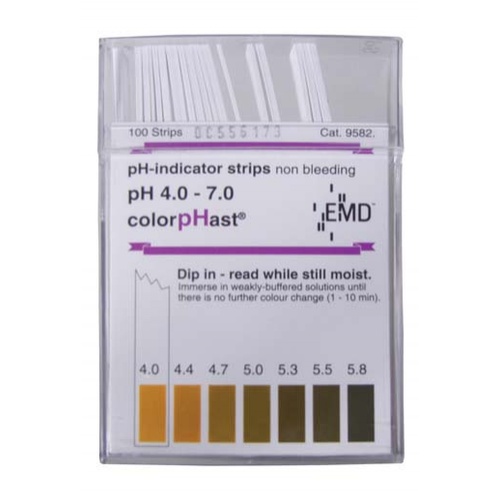
While I feel comfy in the predictions of MpH for my mash pH I do also measure my mash pH for every batch every bit part of my overall quality control (QC) process. My goal is not to achieve a specific brew pH, simply simply to fall within a range of 5.ii – v.four so I am satisfied just using pH test strips. I choose to utilise ColorpHast pH Strips.
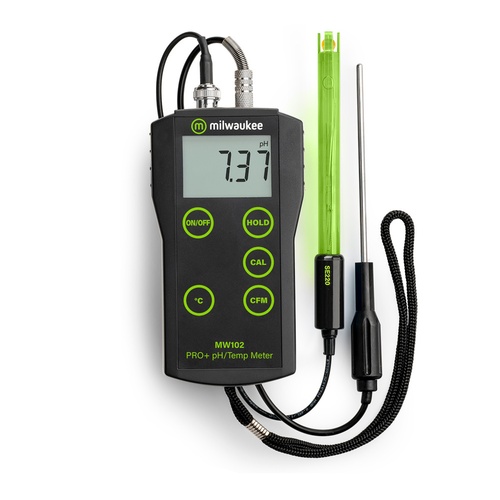
For homebrewers who adopt greater accuracy/precision a pH meter (and accompanying calibration/buffer and electrode storage solutions) is the advisable choice.
Affect of Brewing H2o on Beer flavour
The specific mineral content of brewing water is sometimes referred to as seasoning your beer. An analogy hither is how salt is used to flavor your food. Just simply as how common salt can influence the flavor of your favorite dish the other elective elements of that dish will affect how the salt addition is perceived.
Below are how minerals tin can impact the flavors and sensory aspects of your beer:
Sulfate
Increased levels of sulfate will enhance the hoppy aspects of the beer proving a "crisp" bitterness and will provide a mouthfeel perception of a dry terminate.
Chloride
Chloride volition heighten the perception of sugariness and fullness of the beer and provide an overall aspect of maltiness to the beer.
Sulfate to Chloride ratio
The contributions of sulfate and chloride are discussed above only the relative proportions of these 2 minerals is of import to consider for a given beer fashion. For example, a 2:i ratio would be a good choice for hoppy beers like IPAs while for a malty beer like a Stout or Porter a 1:2 ratio would exist more appropriate.
Sodium
Sodium in concert with chloride can raise both the sweetness and fullness perceived in the beer. But since sodium plus chloride equals NaCl (salt) likewise much sodium tin push the flavor towards minerally/salty. Likewise, in the presence of sulfate sodium creates an unpleasant harshness (see give-and-take of softened well water above).
Calcium
A minimum level of calcium (50 ppm) is needed in the brewing water. It does not influence the flavor just information technology is an important yeast food and provides other benefits such every bit aiding in the precipitation of proteins during the boil. Calcium also contributes to lowering the mash pH.
Magnesium
Magnesium is non absolutely needed in brewing water since malt will provide all of the magnesium needed for yeast health. The of import thing here is to ensure the magnesium level is low (e.k., less than twoscore ppm) since elevated levels of magnesium in the brewing water volition have negative impacts. It tin provide a sour/biting taste at levels over 40 ppm and at much higher levels information technology can provide a laxative result.
Brewing Water profiles/building up water
If using distilled or RO water you volition demand to add water modifiers, also referred to as brewing salts. Some mutual brewing salts are:
- Calcium Chloride (CaCl)
- Gypsum - Calcium Sulfate (CaSOiv)
- Epsom Salt - Magnesium Sulfate (MgSOfour)
Kai Troester provides some examples of water profiles for certain styles of beer at his website:
http://braukaiser.com/wiki/index.php/Various_water_recipes
I have extracted one example from this website below for Pilsners showing the suggested water profile and the necessary brewing salt additions in units of grams per unit of water.

Another source of water profiles is the MpH tool previously discussed; i of the sheets is "Water Profiles".
If using tap water, the water tin still be modified to attain a given contour just you need to know the minerals in your tap h2o to make the proper adjustments. If your tap water is lower than desired for chloride you lot could add together some calcium chloride to requite it a heave. Similarly, if you would prefer increased sulfate you could add some Gypsum (calcium sulfate).
If your tap water has more of a specific mineral than desired (e.thou., magnesium is as well high) yous could purchase some distilled or RO water and dilute your tap water to reach your desired level. You may need to add together some brewing salts to get other desired mineral levels (east.k., chloride, sulfate) back into your desired range. This is a bit like playing the Hokey Pokey only the water tools easily allow you to play effectually and accomplish a specific water profile.
Decision
Brewing water tin be as easy or complicated every bit you want to make it simply there are a few details that I remember are necessary:
- Remove chlorine/chloramine if using municipal tap water
- Do whatever is necessary (e.g., add lactic acid, brewing salts, etc.) to insure you reach a brew pH in the advisable range (i.e., v.2 – 5.4/5.6).
For my homebrewing practise, achieving a specific water profile is beer style dependent. Some examples of beer styles where I take steps to modify my tap water to create an appropriate water profile: Kolsch, English Bitter Ale, Bohemian Pilsner (Czech Pale Lager), and New England IPA. Having stated that, targeting a specific water profile for every beer style is not a bad idea.
Further Reading
This article provides a cursory view of Brewing Water. For the interested pupil, I suggest the book: Water: A Comprehensive Guide for Brewers (Brewing Elements) by John Palmer & Colin Kaminski.
Related Products
All contents copyright 2022 by MoreFlavor Inc. All rights reserved. No part of this document or the related files may exist reproduced or transmitted in any form, by whatever means (electronic, photocopying, recording, or otherwise) without the prior written permission of the publisher.
nicholsonboally1965.blogspot.com
Source: https://www.morebeer.com/articles/Brewing_Water

Post a Comment for "what to add to ro water for brewing"